In goldgrube 's collection
Description
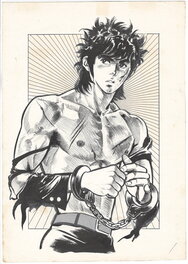
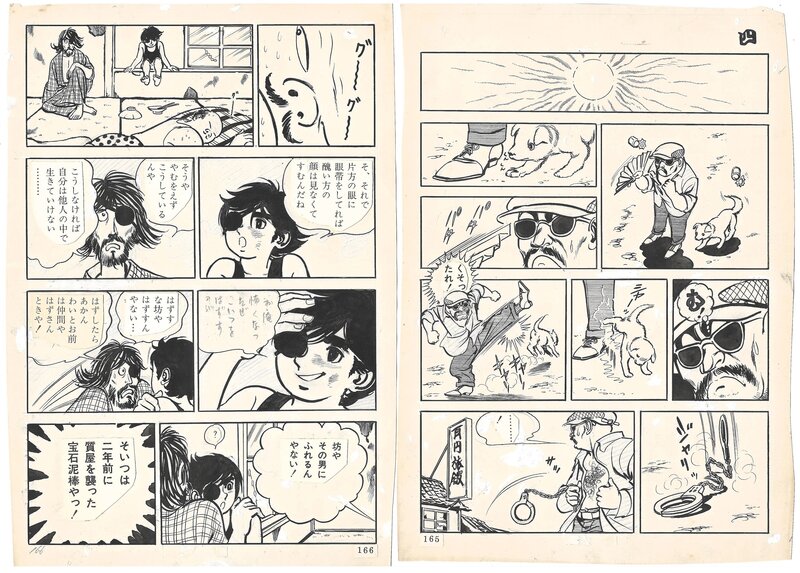
Best known today for Crying Freeman and for drawing one of the most accomplished manga adaptations of Spider-Man, Ryōichi Ikegami was also active during the formative years of Garo. In the late 1960s, Garo functioned as a radical alternative to mainstream manga magazines, offering a platform for experimental, politically charged, and socially conscious works. Ikegami contributed several short, disruptive stories during this period, among them Fuutarō.
Comment
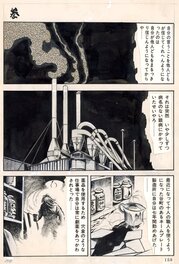
Fuutarō stands out as Ikegami’s first genuine serialised work, consisting of three connected episodes with recurring characters. While brief, it already reveals key aspects of his emerging style: cinematic paneling, strong emotional intensity, and an interest in marginalised figures navigating harsh social realities, traits that would later define his mature work in the seinen genre.
The title Fuutarō evokes the image of a drifter or vagabond (風太郎, literally “wind boy”), reinforcing the series’ focus on unstable lives at the fringes of society. The narrative is inspired by Takeshi Kaikō’s L’Opéra des gueux (Beggar’s Opera), a work deeply concerned with poverty, survival, and social struggle. Ikegami’s adaptation does not romanticise hardship but instead emphasises the raw energy, resilience, and agency of people living at the bottom of the social hierarchy, individuals who strive to escape their circumstances despite overwhelming obstacles.
Seen in retrospect, Fuutarō occupies an important position in Ikegami’s career: a bridge between the countercultural ethos of Garo and the polished, hard-boiled realism that would later make him one of the most influential visual stylists in adult manga.
The title Fuutarō evokes the image of a drifter or vagabond (風太郎, literally “wind boy”), reinforcing the series’ focus on unstable lives at the fringes of society. The narrative is inspired by Takeshi Kaikō’s L’Opéra des gueux (Beggar’s Opera), a work deeply concerned with poverty, survival, and social struggle. Ikegami’s adaptation does not romanticise hardship but instead emphasises the raw energy, resilience, and agency of people living at the bottom of the social hierarchy, individuals who strive to escape their circumstances despite overwhelming obstacles.
Seen in retrospect, Fuutarō occupies an important position in Ikegami’s career: a bridge between the countercultural ethos of Garo and the polished, hard-boiled realism that would later make him one of the most influential visual stylists in adult manga.
To leave a comment on that piece, please log in