In Matthias 's collection
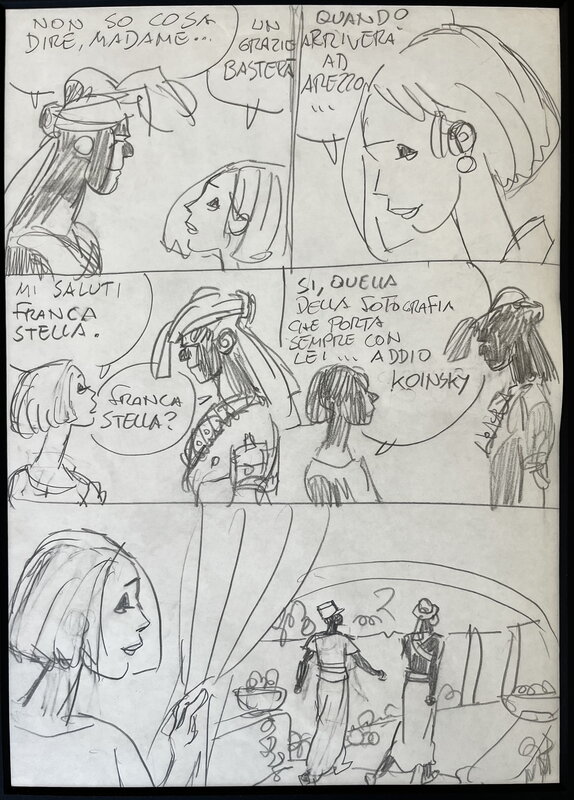
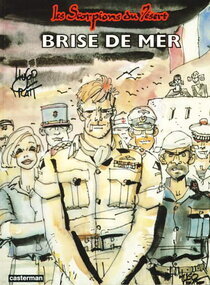
1992 - Les scorpions du Désert #5: Brise de mer - Pg.141
Pencil
Added on 1/31/26
Link copied to clipboard!
Description
After publishing the first four episodes of "Les scorpions of the desert" in 1969 (start of the first pages), 1974, 1975,1980 and 1982, the first half – 72 panel sequences – of the 5th and final episode, called "Brise de mer" appeared in the magazine "Corto Maltese" (starting with issue 110, November 1992), published by Rizzoli.
The complete 5th episode, including the reprint of the first half, was finally published in the special volume "Gli Scorpioni del Deserto – Brise de Mer," released by Lizard in September 1994.
The complete 5th episode, including the reprint of the first half, was finally published in the special volume "Gli Scorpioni del Deserto – Brise de Mer," released by Lizard in September 1994.
Inscriptions
Signature on the back
Comment
Very, very happy to add these two pages to my collection. "Les scorpions du Désert" is most likely the most personal work of Hugo Pratt.
Venice-born Pratt moved as a child with his family to Djibouti during Mussolini’s fiasco in the Horn of Africa. At 13, he was signed up for the army, and the experience sparked a fascination with the military and also cemented an almost spiritual bond with the land and people.
His series “Les scorpions du Désert” was a direct result of this experience, one that urged him to come back to this story arch from 1969 to 1992 - Pratt’s time in Africa formed his personality as well as his art.
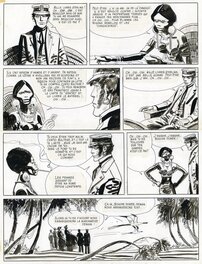
How should I call these two pages with pencil drawings... prelims? Sketches? They are for sure try-outs with storyline that are showing a state in the process of Hugo Pratt in developing the final inked pages and the detailed story.
For me both penciled pages 141 and 142 are artworks for themselves as they show the ability of Hugo Pratt to fluidly and elegantly draw the story without major corrections, combining artwork and text.
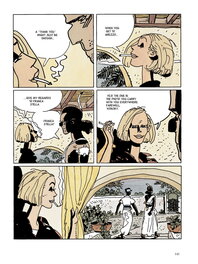
At the same time you can see the difference from the inked, colored and published pages and you can think about the reason for these changes in art and text.
Venice-born Pratt moved as a child with his family to Djibouti during Mussolini’s fiasco in the Horn of Africa. At 13, he was signed up for the army, and the experience sparked a fascination with the military and also cemented an almost spiritual bond with the land and people.
His series “Les scorpions du Désert” was a direct result of this experience, one that urged him to come back to this story arch from 1969 to 1992 - Pratt’s time in Africa formed his personality as well as his art.
How should I call these two pages with pencil drawings... prelims? Sketches? They are for sure try-outs with storyline that are showing a state in the process of Hugo Pratt in developing the final inked pages and the detailed story.
For me both penciled pages 141 and 142 are artworks for themselves as they show the ability of Hugo Pratt to fluidly and elegantly draw the story without major corrections, combining artwork and text.
At the same time you can see the difference from the inked, colored and published pages and you can think about the reason for these changes in art and text.
Publications
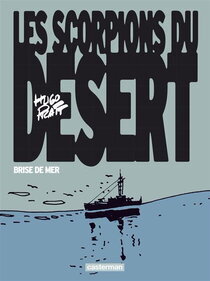
- Brise de mer
- Casterman
- 02/2015
- Page 141
-
- Brise de mer
- Casterman
- 08/1994
- Page 141
-
2 comments
To leave a comment on that piece, please log in
About Hugo Pratt
Hugo Pratt is considered to be one of the greatest among comic artists for his versatile fantasy and use of graphic freedom, and the combination of these factors resulted in very strange stories. In his tales, reality can change into dream and vice-versa, and in this way he took his readers into the strangest lands and even through time. He is thought to be one of the first comic artists to mix literature with adventure. Hugo Pratt has been a great inspiration to comic artists all over the world.