Dans la collection de driesd
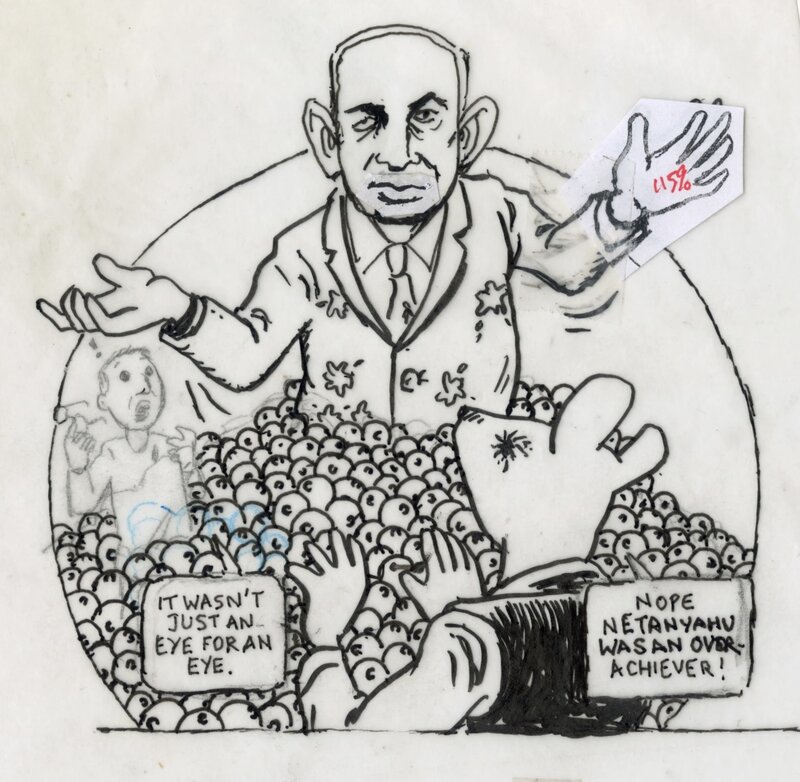
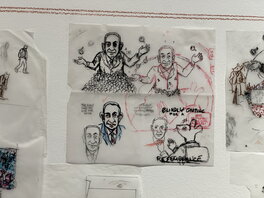
Never Again!.. And Again... And Again...
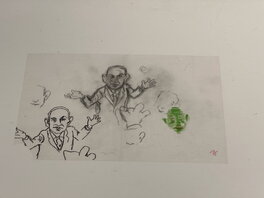
Œuvre originale
circa 2024
Techniques mixtes
Mixed media on translucent paper
18 x 28 cm (7.09 x 11.02 in.)
Ajoutée le 28/12/2025
Lien copié dans le presse-papier !
Description
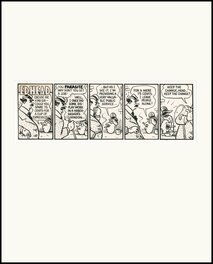
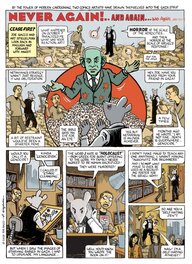
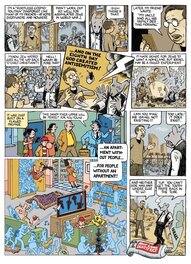
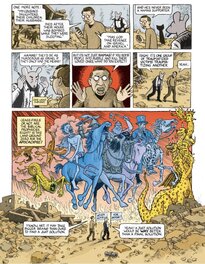
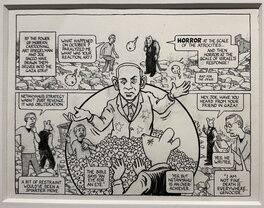
“Never Again!.. And Again… And Again… And Again” is a 3 page collaborative story by Art Spiegelman and Joe Sacco first published in The New York Review of Books (February 2025) and reprinted in major outlets like Le 1 Hebdo, The Guardian, and El País. It's also reprinted in 100 dessins pour Gaza.
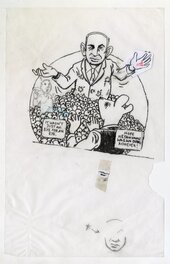
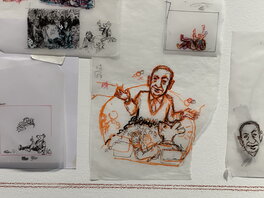
This is a prelim by Art Spiegelman for the central -eye-catching - panel of page 1.
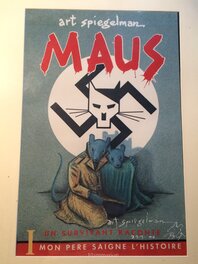
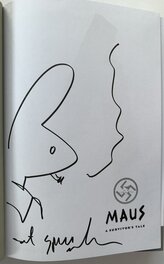
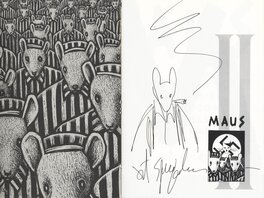
The art comes with a signed "collector edition" of the story (see extra images).
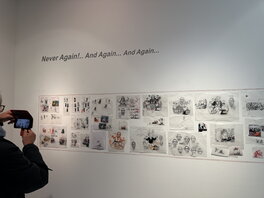
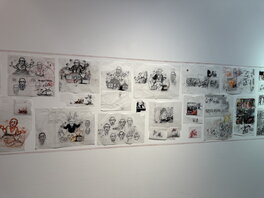
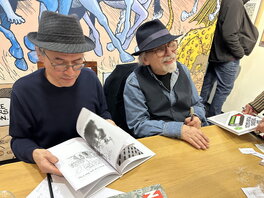
In the extra images you can see pictures from the exhibition at Galerie Martel and the published art.
Dessin préliminaire pour la case « centrale » de la première planche de ce dialogue entre Art Spiegelman et Joe Sacco.
This is a prelim by Art Spiegelman for the central -eye-catching - panel of page 1.
The art comes with a signed "collector edition" of the story (see extra images).
In the extra images you can see pictures from the exhibition at Galerie Martel and the published art.
Dessin préliminaire pour la case « centrale » de la première planche de ce dialogue entre Art Spiegelman et Joe Sacco.
Commentaire
Thanks to Art Spiegelman, Joe Sacco and Galerie Martel for organizing the show and donating the proceeds to UNICEF!
Art Spiegelman about his creative process:
"Basically I have to torture myself; drawing does not come very naturally to me, doodling does."
https://www.youtube.com/watch?v=jhvXLgodDnE 22:35
In this interview on France Inter Art Spiegelman talks about this specific panel and the difficulty in drawing Netanyahu's face "Because Netanyahu has no face. He looks like a shoe-store salesman." https://www.dailymotion.com/video/x9w329a
In the interview he also talks about the Martel show:
05:33 C'est qu'il y a deux murs, un avec beaucoup de ce que Joe a écrit
05:39 et puis moi, ce que j'avais jeté à la poubelle.
05:42 Donc voilà, il y a un dessinateur de BD qui est professionnel
05:48 et l'autre qui est un peu bordélique et qui doit recommencer et recommencer
05:52 et recommencer pour arriver à quelque chose.
05:55 Donc tout ce bordel est sur un mur.
So all that mess is on one wall... (see extra images...)
Interview in the New York Review of Books with Art Spiegelman and Joe Sacco about this "graphic conversation":
https://www.nybooks.com/online/2025/03/08/cant-go-on-must-go-on-joe-sacco-art-spiegelman/
Art Spiegelman: "I’ve been trying to find some way to engage and comment on what’s been going on in Israel and Palestine, feeling that I couldn’t really sit back as a noncombatant, ducking and covering while this was happening."
Interview with Art Spiegelman in Hyperallergic:
https://hyperallergic.com/art-spiegelman-is-learning-how-to-do-this-comics-thing-again/
H: How did your recent collaboration with Joe Sacco for a comic about Gaza come together? What was the process of making it?
Art Spiegelman: "Well, it started as me whining to Joe over the phone about how I had spent a year turning totally into an interview subject, talking about book banning and first amendments and whatever. I became a go-to talking head for such things. By the end of the year, I totally stopped drawing, and it was very hard to get back to drawing comics again; it's not like getting back on a bicycle. I was trying to find tricks to make myself do any kind of work, and Joe kindly said, "Well, right now I'm running on all cylinders because I just finished four years on a book about India. Why don't we get together and jam?" “Jamming” means drawing on the same paper as someone, passing it back and forth and seeing what comes of it. That was an offer I couldn't refuse. I did that a lot in the age of underground comics, and I always learned from it, because you find out how people think and work by working in proximity.
This could have become that, but it changed before it started because we started having in-depth conversations about Gaza. At a certain point, my wife intervened and said, "Do this on Zoom so you can record it and listen back to what you've been saying.” It was ultimately four hours of conversation, which we refined to the three pages for that piece. We had to figure out how much we could squeeze into such a small space and cover a lot of material. And then Joe came out and we began to make some drawings together, with each of us tackling a different panel or passing something back and forth, or me making a thumbnail sketch and him developing that.
I'm learning how to do this comics thing again, and I'll be damned if I'm going to draw the Four Horsemen of the Apocalypse. So we horse-traded who did what as we proceeded: “Horses are hard, and you can do them really well. I saw the thing you did about World War I. I'll tell you what, your caricature of Netanyahu isn't that great. Neither is my first stab at it; he's hard to draw. But how about if I do that Netanyahu panel in exchange for you doing the horses?” Joe did the lettering, I did the coloring, and it became a very fluid conversation. It took nine months, so it was like giving birth. And I think the only reason people ever have more than one kid is because the mother forgets how painful it is. So this gave me a kickstart toward making some comics again."
For those with a little more time (and wanting to conquer the ever-changing world of Youtube and
streaming platforms) I can recommend the PBS American Masters documentary Art Spiegelman: "Disaster Is My Muse". Ironically this documentary also digging into censorship and book banning has been censored...
https://www.pbs.org/video/art-spiegelman-disaster-is-my-muse-kqfn5y/
Art Spiegelman about his creative process:
"Basically I have to torture myself; drawing does not come very naturally to me, doodling does."
https://www.youtube.com/watch?v=jhvXLgodDnE 22:35
In this interview on France Inter Art Spiegelman talks about this specific panel and the difficulty in drawing Netanyahu's face "Because Netanyahu has no face. He looks like a shoe-store salesman." https://www.dailymotion.com/video/x9w329a
In the interview he also talks about the Martel show:
05:33 C'est qu'il y a deux murs, un avec beaucoup de ce que Joe a écrit
05:39 et puis moi, ce que j'avais jeté à la poubelle.
05:42 Donc voilà, il y a un dessinateur de BD qui est professionnel
05:48 et l'autre qui est un peu bordélique et qui doit recommencer et recommencer
05:52 et recommencer pour arriver à quelque chose.
05:55 Donc tout ce bordel est sur un mur.
So all that mess is on one wall... (see extra images...)
Interview in the New York Review of Books with Art Spiegelman and Joe Sacco about this "graphic conversation":
https://www.nybooks.com/online/2025/03/08/cant-go-on-must-go-on-joe-sacco-art-spiegelman/
Art Spiegelman: "I’ve been trying to find some way to engage and comment on what’s been going on in Israel and Palestine, feeling that I couldn’t really sit back as a noncombatant, ducking and covering while this was happening."
Interview with Art Spiegelman in Hyperallergic:
https://hyperallergic.com/art-spiegelman-is-learning-how-to-do-this-comics-thing-again/
H: How did your recent collaboration with Joe Sacco for a comic about Gaza come together? What was the process of making it?
Art Spiegelman: "Well, it started as me whining to Joe over the phone about how I had spent a year turning totally into an interview subject, talking about book banning and first amendments and whatever. I became a go-to talking head for such things. By the end of the year, I totally stopped drawing, and it was very hard to get back to drawing comics again; it's not like getting back on a bicycle. I was trying to find tricks to make myself do any kind of work, and Joe kindly said, "Well, right now I'm running on all cylinders because I just finished four years on a book about India. Why don't we get together and jam?" “Jamming” means drawing on the same paper as someone, passing it back and forth and seeing what comes of it. That was an offer I couldn't refuse. I did that a lot in the age of underground comics, and I always learned from it, because you find out how people think and work by working in proximity.
This could have become that, but it changed before it started because we started having in-depth conversations about Gaza. At a certain point, my wife intervened and said, "Do this on Zoom so you can record it and listen back to what you've been saying.” It was ultimately four hours of conversation, which we refined to the three pages for that piece. We had to figure out how much we could squeeze into such a small space and cover a lot of material. And then Joe came out and we began to make some drawings together, with each of us tackling a different panel or passing something back and forth, or me making a thumbnail sketch and him developing that.
I'm learning how to do this comics thing again, and I'll be damned if I'm going to draw the Four Horsemen of the Apocalypse. So we horse-traded who did what as we proceeded: “Horses are hard, and you can do them really well. I saw the thing you did about World War I. I'll tell you what, your caricature of Netanyahu isn't that great. Neither is my first stab at it; he's hard to draw. But how about if I do that Netanyahu panel in exchange for you doing the horses?” Joe did the lettering, I did the coloring, and it became a very fluid conversation. It took nine months, so it was like giving birth. And I think the only reason people ever have more than one kid is because the mother forgets how painful it is. So this gave me a kickstart toward making some comics again."
For those with a little more time (and wanting to conquer the ever-changing world of Youtube and
streaming platforms) I can recommend the PBS American Masters documentary Art Spiegelman: "Disaster Is My Muse". Ironically this documentary also digging into censorship and book banning has been censored...
https://www.pbs.org/video/art-spiegelman-disaster-is-my-muse-kqfn5y/
3 commentaires
Pour laisser un commentaire sur cette œuvre, veuillez vous connecter
A propos de Art Spiegelman
Art Spiegelman (de son prénom Arthur, il est appelé Artie par son père) est un auteur de bande dessinée et illustrateur américain, né à Stockholm en Suède. Figure phare de la bande dessinée underground américaine des années 1970-1980, il devient surtout connu à partir du milieu des années 1980 pour sa bande dessinée Maus, qui lui a valu un Prix Pulitzer spécial en 1992. C'est également un illustrateur reconnu. Il est sacré Grand prix de la ville d'Angoulême en 2011.