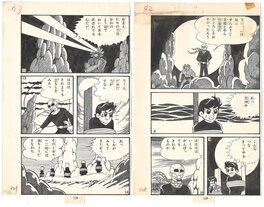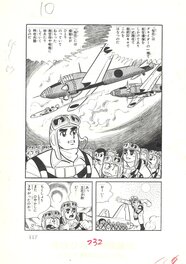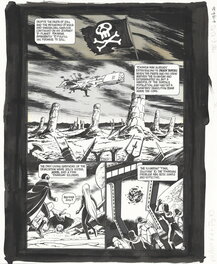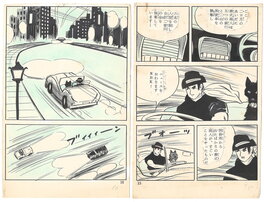
Œuvre mise en vente par Sultans of Manga
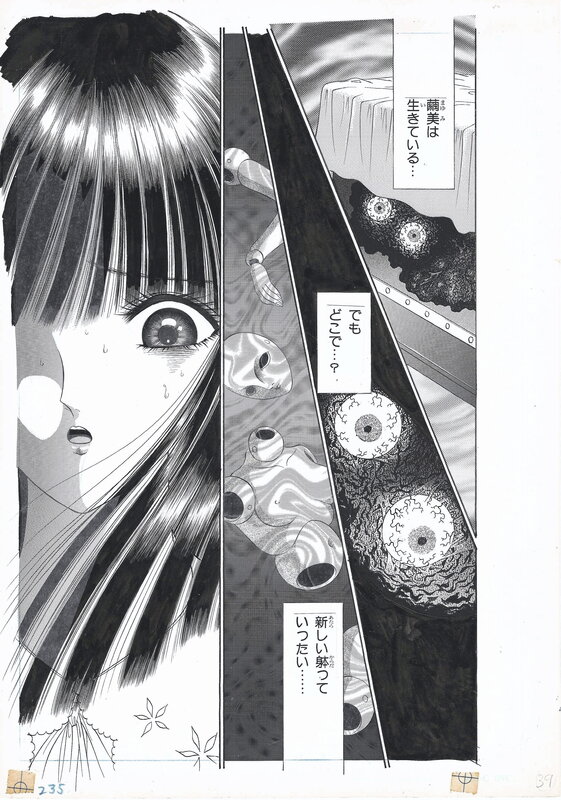
Beauty | Shoujo Pandora | Suspiria '95 | pg.39
Encre de Chine
26 x 36 cm (10.24 x 14.17 in.)
Prix : 400 €
[$]
Lien copié dans le presse-papier !
Description
Planche 39
Première publication dans Suspiria supplément Gakuen Mystery - Mars 1995
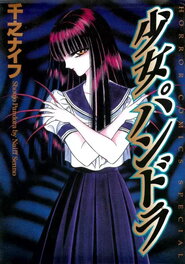
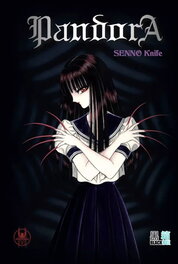
Première publication en France dans Pandora par Black Box Editions – Juillet 2024
Encre de Chine et trame
Première publication dans Suspiria supplément Gakuen Mystery - Mars 1995
Première publication en France dans Pandora par Black Box Editions – Juillet 2024
Encre de Chine et trame
Commentaire
Senno Knife (千之ナイフ - 1960), aka Kazuto Yamamoto, débute sa carrière auprès des maîtres Leiji Matsumoto et Miyako Maki. En 1981, il publie Yukihime, pionnier du Bishōjo Manga, mêlant finesse graphique et sensualité. Reconnu pour sa polyvalence, il explore shōnen, shōjo, fantasy, SF, érotisme et horreur, avec des œuvres emblématiques telles que Hyaku Mensou Circus ou Shōnen X.
Dans les années 90, il s’impose dans le manga d’horreur avec des séries comme Shōjo Pandora et Sister, publiées internationalement, alliant esthétique saisissante et récits sanglants, proche des univers de Dario Argento. Sensible aux enjeux sociaux, il aborde aussi la transidentité, offrant des récits engagés et variés.
Compagnon de la mangaka et chanteuse Rutoto Nekoi, il illustre plusieurs pochettes de son groupe PSYDOLL, témoignant de son influence au-delà du manga.
Dans les années 90, il s’impose dans le manga d’horreur avec des séries comme Shōjo Pandora et Sister, publiées internationalement, alliant esthétique saisissante et récits sanglants, proche des univers de Dario Argento. Sensible aux enjeux sociaux, il aborde aussi la transidentité, offrant des récits engagés et variés.
Compagnon de la mangaka et chanteuse Rutoto Nekoi, il illustre plusieurs pochettes de son groupe PSYDOLL, témoignant de son influence au-delà du manga.
Senno Knife is a Japanese mangaka best known for works such as Shitaro-kun, Sister, and La Fin de l'Eden. For years, he lingered in the eerie shadows of the horror manga world, never quite achieving the widespread recognition of some of his contemporaries, such as Junji Ito. Yet, after more than four decades, he has cultivated a dedicated global following, with his distinctive style continuing to haunt and captivate readers.
A devoted admirer of dolls and macabre imagery, Knife’s work is marked by a fascination with dismembered bodies and haunting, dreamlike horror. His storytelling, steeped in grotesque beauty and psychological unease, places him firmly within the realm of Japanese horror, alongside other notable creators like Michiru Noroi, Miyako Cojima, and, of course, Junji Ito.
Although he may not wield the same cultural influence as Ito, Senno Knife is undeniably a part of the same generation of horror mangaka, sharing thematic and stylistic similarities. His work Pandora is a prime example!
Like Ito, he was a frequent contributor to horror mangazines aimed at young readers, often delving into the anxieties of adolescence. Through a blend of psychological terror and surreal, nightmarish imagery, he crafts stories that unsettle as much as they mesmerize.
With his distinct fusion of gothic horror and eerie elegance, Senno Knife has secured his place in the pantheon of Japanese horror manga — an artist whose work continues to lurk in the dark recesses of the genre, waiting to be discovered by new generations of horror enthusiasts
Pour laisser un commentaire sur cette œuvre, veuillez vous connecter